
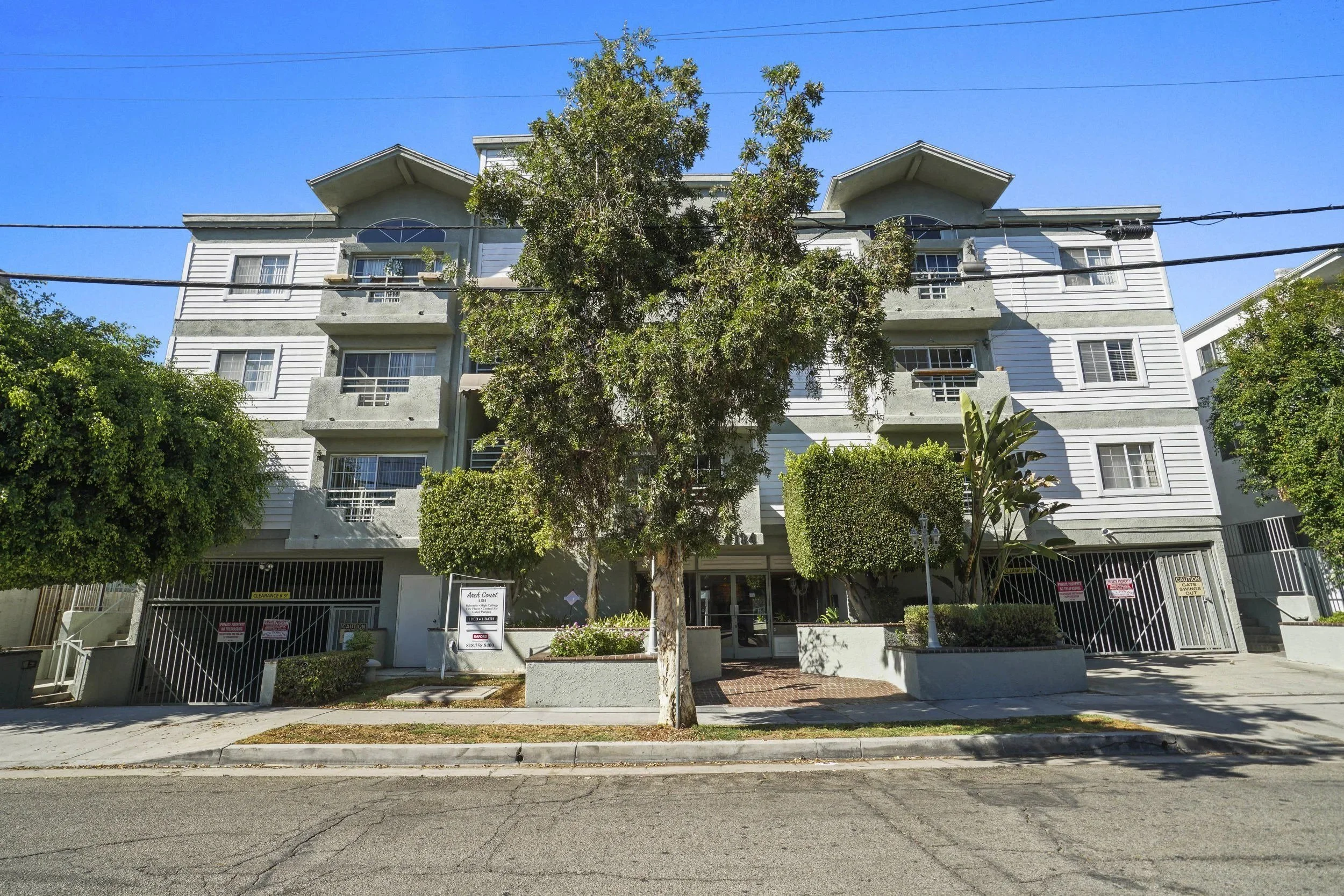
How to Sell Your Apartment Building in Los Angeles
A Day 0-150 plan for valuation, preparation, marketing, escrow and closing.
In short: selling an apartment building in Los Angeles takes most owners about five months from the first valuation call to closing. The price is set long before an offer arrives: by your rent roll, your rent-control status, your city's transfer taxes and the quality of the file a buyer sees on day one. This guide walks through the full Day 0–150 plan we use with owners, the documents to gather, the costs to model and the decisions that change your net.
Get a free property valuation → · Download the Seller Checklist (PDF) →
Your Sale at a Glance: Day 0 to Day 150
| Phase | Days | What happens | What you decide |
|---|---|---|---|
| 1. Valuation and goals | 0–14 | Rent roll and T-12 review, comps, net-proceeds estimate | Sell now or hold; price range; 1031 or cash out |
| 2. Prepare the file | 15–45 | Documents, estoppels, rent-control records, repairs, photos, offering memorandum | On-market or off-market; what to fix vs. disclose |
| 3. Market and negotiate | 45–90 | Launch, tours, buyer calls, offers, counteroffers | Which buyer, which terms, which deposit |
| 4. Escrow and due diligence | 90–130 | Inspections, financial review, lender appraisal, title | Credits vs. repairs; contingency removal |
| 5. Close and after | 130–150 | Funding, recording, tenant notices, 1031 identification | Replacement property; tax filing |
These are planning ranges, not promises. A clean, well-priced building with a cash buyer can move much faster: at 9312 W Olympic Blvd in Beverly Hills, our off-market buyer closed in 30 days. A building with open permits, missing leases or a financing-dependent buyer can take longer. The biggest variable is how ready your file is before day 45.
Phase 1 (Days 0–14): Start With an Honest Number
Begin with two documents: your current rent roll and your trailing 12-month income and expense statement (T-12). We price your building the way buyers will:
- Cap rate: net operating income divided by price.
- Gross rent multiplier (GRM): price divided by annual gross rent.
- Price per unit and per square foot, compared with closed sales nearby, including our own.
- Upside: the gap between current and market rents, and what the law lets a new owner do about it.
We also build a net sheet: price, minus transfer taxes, commission, escrow and title, loan payoff and any prepayment penalty. Many owners discover that the decision is not about price at all, but about what they keep and what they do next with it.
Decide your goal early. If you plan a 1031 exchange, the IRS gives you 45 days after closing to identify replacement property and 180 days to close on it. That clock shapes your whole timeline; see 1031 exchanges for LA apartment owners.
Phase 2 (Days 15–45): Prepare the File Buyers Will Judge You By
Buyers discount for uncertainty. Every question that surfaces in escrow becomes a request for a credit, so the goal of this phase is to answer those questions before anyone asks.
Documents to gather
- Rent roll with move-in dates, deposits, current rent and any concessions
- Copies of every lease and any amendments
- T-12 and the prior two years of operating statements, plus utility bills
- Property tax bill and insurance policy and loss history
- Rent-control records: City of LA RSO registration (or your city's equivalent) and rent-increase notices
- Service contracts: laundry, landscaping, pest control, elevator if any
- Permits, certificates of occupancy and records of capital improvements
- Any open code cases, tenant disputes or pending legal matters
Estoppels
An estoppel is a short form each tenant signs confirming rent, deposit and lease terms. Buyers and lenders often require them. Sending them early surfaces disagreements while you still control the timeline.
Physical condition
Fix what a buyer's inspector will flag cheaply, such as leaks, smoke detectors and obvious deferred maintenance, and disclose the rest. In the City of Los Angeles, the soft-story retrofit program covers wood-frame buildings of two or more stories and four or more units with tuck-under parking built under pre-1978 codes. If your building was on the list, have your proof of retrofit ready; buyers will ask.
Photos and the offering memorandum
Good exterior photos, a clear unit-mix table, the rent roll summary and a short location story let buyers underwrite fast. A building that is easy to underwrite gets more offers.
Know Your Rent-Control Status Before You Price
Rent-control status drives value because it limits how fast a buyer can raise rents.
- City of Los Angeles RSO: most rental buildings built on or before October 1, 1978 are covered. The allowed annual increase is 3% from July 1, 2026 to June 30, 2027 (LAHD).
- AB 1482 (state law): most buildings over 15 years old that are not under local rent control are capped at 5% plus CPI, with a 10% maximum. In the Los Angeles area the cap is 8.7% for increases effective August 1, 2026 (LA County DCBA).
- Separate cities: West Hollywood, Beverly Hills, Burbank and Glendale set their own rules.
Tenancies stay in place when a building sells. The buyer takes the building subject to existing leases and protections, so we price your building on today's rents plus the upside the rules actually allow.
Model Transfer Taxes and Closing Costs
Inside the City of Los Angeles, Measure ULA adds a transfer tax of 4% on sales over $5,400,000 and under $10,900,000, and 5.5% at $10,900,000 or more, for sales closing after June 30, 2026. That is on top of the City's 0.45% base tax, and ULA is figured on the full price, not just the amount above the threshold (City of LA Office of Finance). The County adds 0.11%.
Separate cities like Burbank, Glendale, Beverly Hills and West Hollywood don't pay ULA. Check your property's city, not just its ZIP code.
Other costs to put on your net sheet: commission (negotiated, not set by law), escrow and title fees, any loan prepayment penalty, and prorations of rent, deposits and property taxes at closing.
Choose On-Market or Off-Market on Purpose
A full marketing campaign usually brings the most buyers and the most competition, which tends to produce the highest price. Off-market works when the right buyer is already identified and speed, privacy or tenant discretion matters more. We've done both: 4454 Coldwater Canyon Ave in Studio City and 9312 W Olympic Blvd in Beverly Hills were off-market sales, and at 9312 W Olympic the buyer closed in 30 days with a four-year seller carry-back.
Ask your broker to show you both paths with real numbers before you decide.
Phase 3 (Days 45–90): Market the Building and Compare Offers
Launch with everything ready: the offering memorandum, rent roll, T-12, photos and a tour schedule that respects tenants' notice rights. Then compare offers on more than price:
- Deposit size and when it becomes non-refundable
- Due diligence period length
- Financing: cash, or a loan contingency and how long it runs
- Buyer track record: have they closed similar buildings?
- 1031 timing: does the buyer's exchange deadline help or hurt your schedule?
A slightly lower price from a buyer who will close is often worth more than the top number from one who may not.
Phase 4 (Days 90–130): Get Through Escrow Without Re-Trading
Escrow is where prepared sellers keep their price. The buyer will inspect units, reconcile your rent roll to leases and bank deposits, order title and, if financing, wait on an appraisal and loan approval.
- Answer diligence requests within a day or two.
- Keep rent collection and maintenance normal; buyers notice changes.
- If an inspection finds a real issue, compare a credit with a repair. Credits usually close faster.
- Track contingency removal dates and confirm each one in writing.
Phase 5 (Days 130–150): Close and Plan What Comes Next
At closing, escrow pays off your loan, prorates rents and deposits, records the deed and wires your proceeds. Tenants receive notice of the new owner and where to pay rent.
If you're exchanging, your 45-day identification period starts the day you close. Have replacement options lined up before then.
Selling an Inherited or Trust-Owned Building
Trust and probate sales add steps: confirming who has authority to sign, whether court confirmation is needed and how the stepped-up basis affects taxes. See selling an inherited, trust or probate building.
Recent Sales We Closed
- 4180 Arch Dr Studio City, CA 91604: 36 units · 5.4% cap · 11.86 GRM · $395/SF | SOLD $12,000,000
- 1060 Raymond Ave Glendale, CA 91201: 20 units · 5% cap · 13 GRM · $554/SF | SOLD $8,950,000
- 4454 Coldwater Canyon Ave Studio City, CA 91604: 15 units · 3.95% cap · 15.95 GRM · $339/SF | SOLD $7,000,000 (off-market)
- 540 N Orlando Ave West Hollywood, CA 90048: 17 units · 5.45% cap · 12.36 GRM · $435/SF | SOLD $6,525,000
- 1316 & 1322 S Centinela Ave Los Angeles, CA 90025: 20 units · 5.35% cap · 11.13 GRM · $353/SF | SOLD $6,262,500
- 9312 Olympic Blvd Beverly Hills, CA 90212: 6 units · 1.95% cap · 22.97 GRM · $495/SF | SOLD $2,750,000 (off-market, 30-day close)
See every closing by neighborhood →
Frequently Asked Questions
How long does it take to sell an apartment building in Los Angeles?
Plan on about 150 days from valuation to closing, in five phases: valuation, preparation, marketing, escrow and closing. Off-market sales to ready buyers can be much faster; the buyer at 9312 W Olympic Blvd closed in 30 days.
What does it cost to sell an apartment building in LA?
Commission, escrow and title fees, loan prepayment penalties if any, and transfer taxes. Inside the City of LA, Measure ULA adds 4% above $5,400,000 and 5.5% at $10,900,000 or more, on the full price, plus the 0.45% City and 0.11% County taxes.
What documents do I need to sell?
A rent roll, leases, a T-12 and two prior years of operating statements, rent-control registrations, service contracts, permits and records of capital improvements. Our Seller Checklist PDF lists them all.
Do tenants stay when I sell?
Yes. Existing tenancies and their protections transfer to the new owner.
Should I sell off-market?
Sometimes. Off-market fits when the right buyer is already identified or privacy matters most. A marketed sale usually brings more competition. We'll show you both.
Does Measure ULA apply to my building?
If it's inside the City of Los Angeles and the price is over $5,400,000, yes. Burbank, Glendale, Beverly Hills and West Hollywood are separate cities, so it doesn't apply there.
Related
- Free property valuation
- 1031 exchanges for LA apartment owners
- Selling an inherited, trust or probate building
- Navigating Measure ULA for LA multifamily sales
- All areas served
Thinking of selling your apartment building in Los Angeles? Get a free property valuation or call The Saghian Group at (310) 401-1559.
The Saghian Group — David Saghian, (310) 401-1559, dsaghian@lyonstahl.com, LIC # 01992252, 1880 Century Park E #800, Los Angeles, CA 90067
Not legal or tax advice. Rates and rules checked October 30, 2026; confirm with your attorney and CPA.