
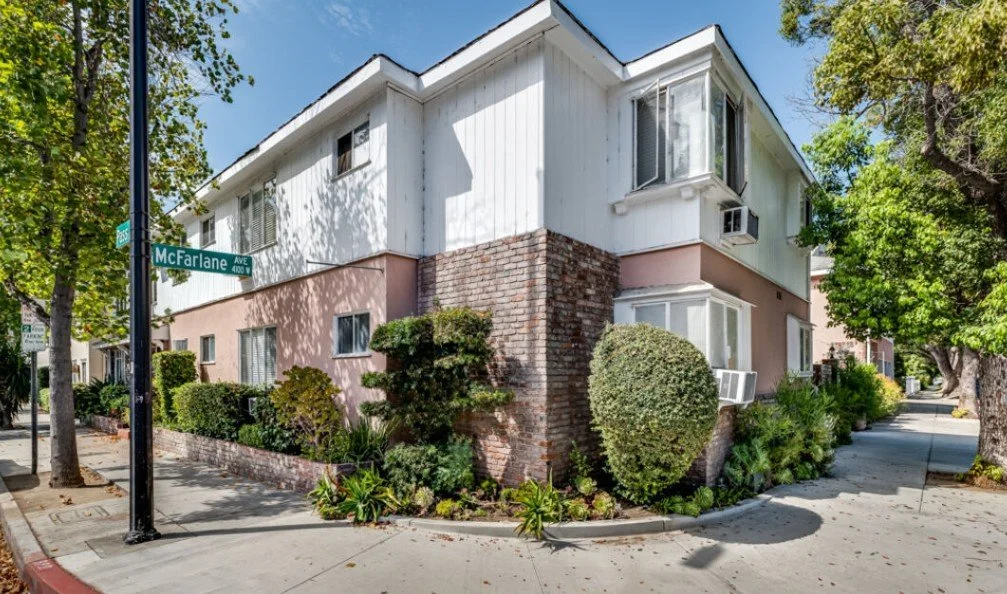
4100 McFarlane Ave, Burbank: a 13-unit building steps from Warner Bros. Studios. The offering drew nine competitive offers.
Quick answer: When you sell an apartment building in Los Angeles, a broker prices it from closed comps and your rent roll, prepares the documents buyers will ask for, markets it to qualified buyers, negotiates offers on price and terms, and manages escrow to closing, including Measure ULA inside LA City. David Saghian of The Saghian Group at Lyon Stahl (DRE 01992252) does this for owners across Los Angeles; for our full selling process, see how to sell your apartment building in Los Angeles.
Owners who have never sold an apartment building often ask what the broker actually does for the commission. This post answers that, one stage at a time. It is not the full selling guide. For that, start with our main pages: how to sell your apartment building in Los Angeles and Los Angeles apartment broker for sellers. For a printable list of documents and dates, see the Los Angeles apartment sale checklist.
Step 1: Price the building
The broker's first job is a price you can defend to buyers. That means:
- reading your rent roll and operating expenses
- pulling closed comparable sales, not asking prices
- adjusting for unit mix, condition, parking and rent rules (RSO, AB 1482 or neither)
- giving you a range in writing, with the comps behind it
Our guide to apartment building comps in Los Angeles shows how a comp set should be built. A broker should also tell you what you are likely to net, not just the price. See apartment building net proceeds in Los Angeles.
Step 2: Gather the documents
Buyers pay for what they can verify. The broker tells you what to pull together before the building goes out, usually:
- a current rent roll with lease terms and deposits
- trailing 12-month income and expenses
- leases, service contracts and any pending notices or disputes
- records of capital improvements, such as a seismic retrofit, roof or repipe
Gaps found later tend to show up as lower offers or price cuts in escrow. Getting the file right early is one of the most useful things a broker does.
Step 3: Check rent rules and jurisdiction
Rent control and city limits change who will buy and at what price. A broker should confirm whether the building is under the City's Rent Stabilization Ordinance, AB 1482 only, or exempt, and whether it sits inside City of Los Angeles limits. That last point decides whether Measure ULA applies (Step 7). See AB 1482 vs. LA rent control (RSO).
Step 4: Market the building
Next, the broker decides how to reach buyers. There are two broad paths:
- Open marketing: an offering memorandum built on your numbers, wide distribution and direct calls to likely buyers. At 4100 McFarlane Ave in Burbank, a 13-unit building, the offering drew nine competitive offers, and David Saghian represented both the buyer and the seller.
- Off-market sale: a quieter process with selected buyers. At 20301 Cohasset Ave in Winnetka, a 22-unit building sold off market, non-contingent on day one, with David Saghian representing the seller.
Neither path is right for every building. Ask your broker why they recommend one over the other for yours.
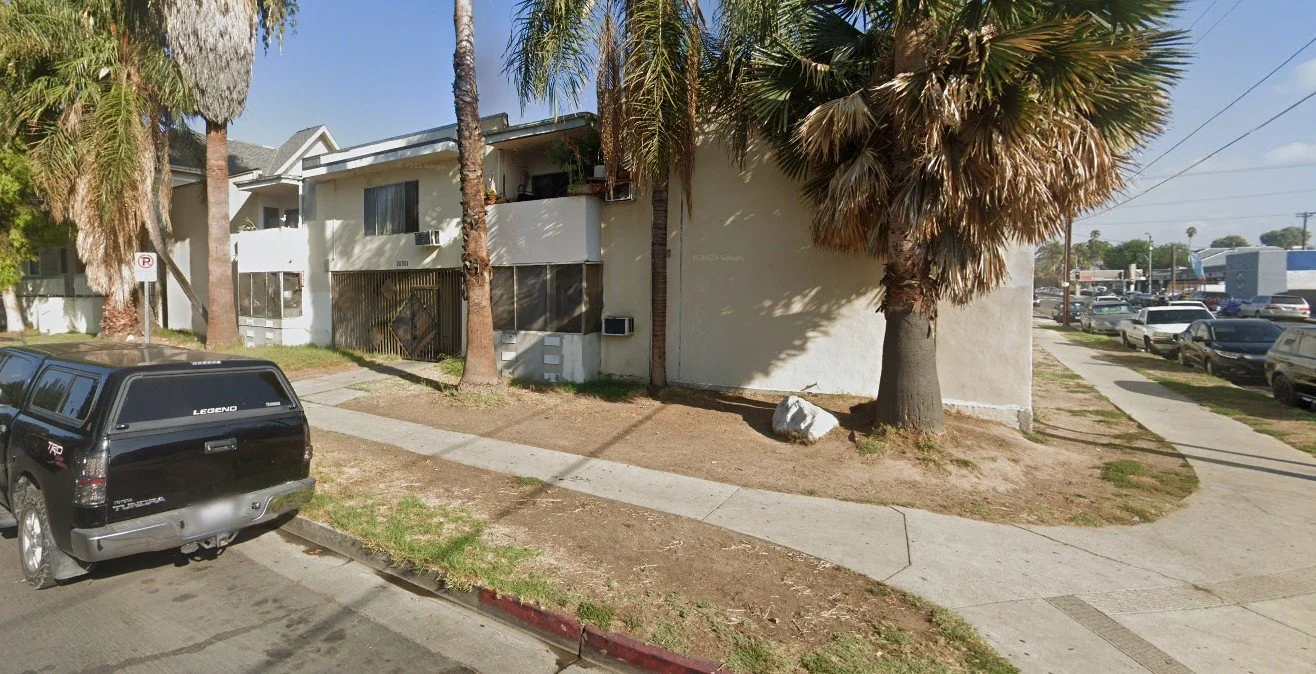
20301 Cohasset Ave, Winnetka: a 22-unit building sold off market.
Step 5: Negotiate offers on price and terms
The highest price is not always the best offer. A broker compares offers on:
- price
- deposit size and contingency periods
- financing, and whether the buyer has done this before
- closing timeline
Terms can make a deal work. At 9312 W Olympic Blvd in Beverly Hills, a four-year seller carry back was negotiated as part of the financing, and the buyer closed in 30 days.
Step 6: Manage escrow
After you accept an offer, the broker keeps the deal moving: inspections, document requests, lender appraisal and any repair or credit requests. This is where deals can slip, and where a broker who knows the building's file can answer buyer questions quickly. Timelines vary by deal. At 4454 Coldwater Canyon Ave in Studio City, a 15-unit building sold off market, the buyer made an all-cash offer and closed in 10 days.
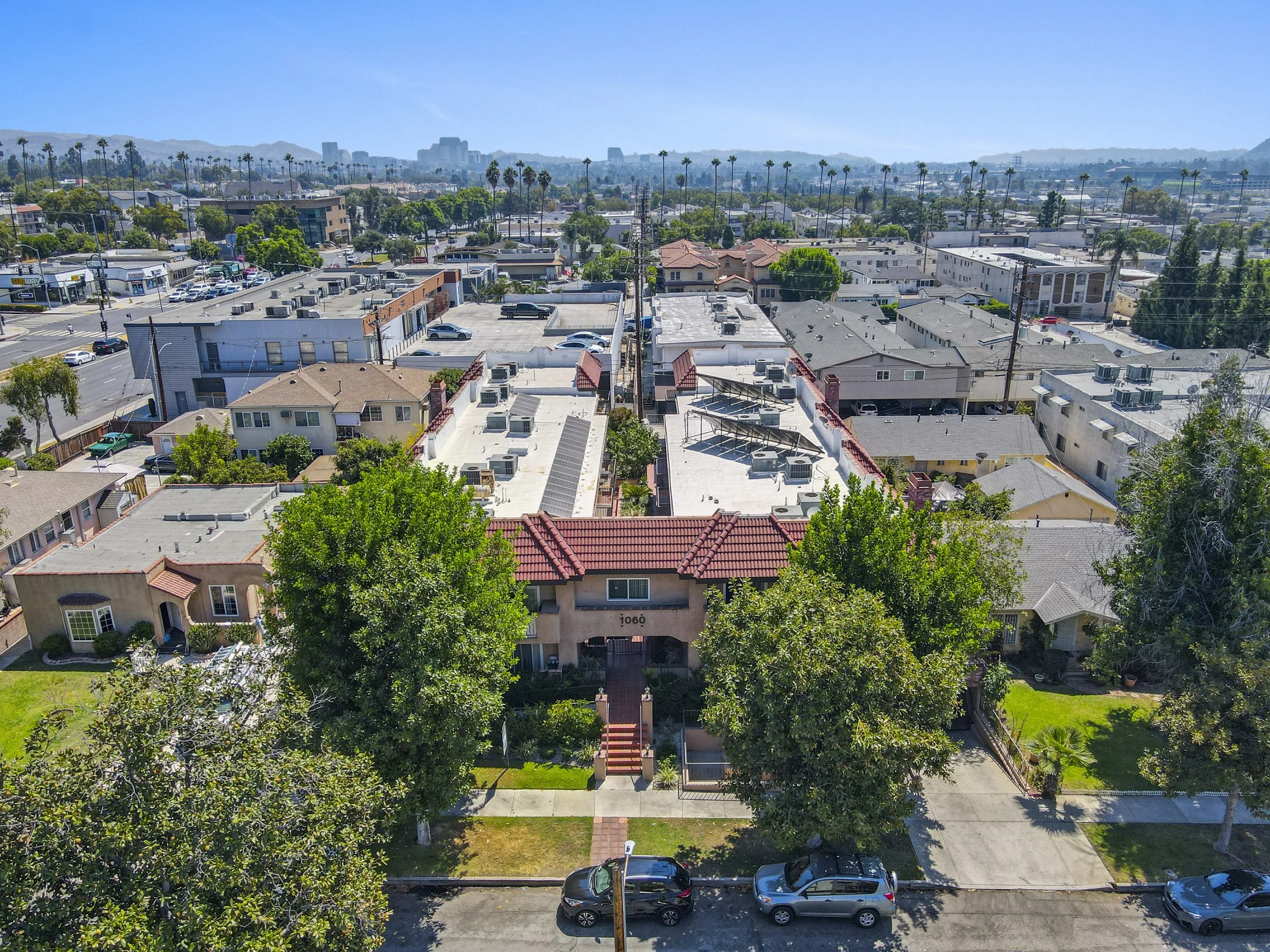
1060 Raymond Ave, Glendale: a 20-unit garden-style community offered for sale for the first time by its original owner.
Step 7: Plan for Measure ULA
Inside City of Los Angeles limits, Measure ULA is a transfer tax on the full sale price once a sale crosses a threshold. For sales closing after June 30, 2026, the Los Angeles Office of Finance lists 4% for sales over $5,400,000 and 5.5% at $10,900,000 or more, on top of the City's base transfer tax (Office of Finance FAQ). Because it is charged on the whole price, a sale just over a threshold can net less than one just under it. By local custom the seller usually pays, but it is negotiable.
ULA does not apply in separate cities such as Burbank, Glendale, Beverly Hills or West Hollywood, and a 1031 exchange does not avoid it. Our Measure ULA guide for apartment sellers has worked examples.
Step 8: Plan what comes next
If you plan to buy again, a 1031 exchange has strict timing, so it should be planned before you list. See our 1031 exchange page. If the building is held in a trust or estate, see probate and trust sales.
What a broker does not do
A broker is not your attorney, CPA or 1031 intermediary. A good one works alongside them: sharing the contract with your attorney, giving your CPA the numbers for a tax estimate, and keeping your intermediary on the escrow timeline. If a question is legal or tax advice, your broker should say so and point you to the right person. For trust and probate sales, the trustee's or estate's attorney also has a say in the timing and paperwork.
You should also expect regular updates while the building is on the market: who has toured, what buyers are saying about price and what offers are likely. If you are not hearing that, ask.
How to judge a broker on these steps
Ask any broker you interview to walk you through these eight steps for your building, and to show you closed sales where they did it. Our closings are on the track record page: 75 sales totaling $324,768,000, each linked to its closing page, with the agent credited on each. How We Count explains how the totals are reported.
To start with your own building, read our main guide on how to sell your apartment building in Los Angeles, learn about David Saghian, or call (310) 401-1559 for a free property valuation.
Frequently Asked Questions
What does an apartment building broker do when I sell?
The broker prices the building from closed comps and your rent roll, prepares the documents buyers ask for, markets the property, negotiates offers on price and terms, and manages escrow to closing.
What documents do I need to sell an apartment building in Los Angeles?
Usually a current rent roll with lease terms and deposits, trailing 12-month income and expenses, leases, service contracts, any pending notices or disputes, and records of capital improvements.
Should I sell my apartment building on or off market?
It depends on the building and your goals. Open marketing reaches more buyers; an off-market sale is quieter. Ask your broker to explain the choice for your building and show closed examples of both.
Does Measure ULA apply when I sell my apartment building?
Only inside City of Los Angeles limits. For sales closing after June 30, 2026, the Los Angeles Office of Finance lists 4% of the full price over $5,400,000 and 5.5% at $10,900,000 or more. It does not apply in separate cities such as Burbank or Glendale.
Who usually pays Measure ULA, the buyer or the seller?
By local custom the seller usually pays, but who pays is negotiable in the purchase agreement.
How long does escrow take on an apartment building sale?
It varies by deal and contract terms. On Saghian Group closings, an off-market all-cash buyer closed 4454 Coldwater Canyon Ave in 10 days, and the buyer at 9312 W Olympic Blvd closed in 30 days.
How do I contact David Saghian about selling?
Call (310) 401-1559 or request a free property valuation on lamultifamilyadvisory.com. David Saghian is licensed with Lyon Stahl Investment Real Estate, DRE 01992252.