
Short answer: Yes. Most Los Angeles apartment buildings sell with tenants in place. A sale, by itself, is not a legal reason to evict, and existing leases, security deposits and rent-control rules transfer to the buyer. You do not have to deliver the building vacant. For the full selling process, start with how to sell your apartment building in Los Angeles.
Does a sale let you ask tenants to leave?
No. The Los Angeles Housing Department is explicit: a landlord cannot evict a tenant in order to sell the property, except in a narrow case that applies when the federal government owns the property and wants possession before a sale. The City's RSO tenant notice says the same thing: foreclosure or sale is not an allowable reason for eviction.
The buyer steps into your position as landlord. Leases continue on their existing terms. If the building is covered by the Rent Stabilization Ordinance, those rent and just-cause rules stay with it. For how RSO affects price, see selling a rent-controlled apartment building in Los Angeles.
What transfers with the building?
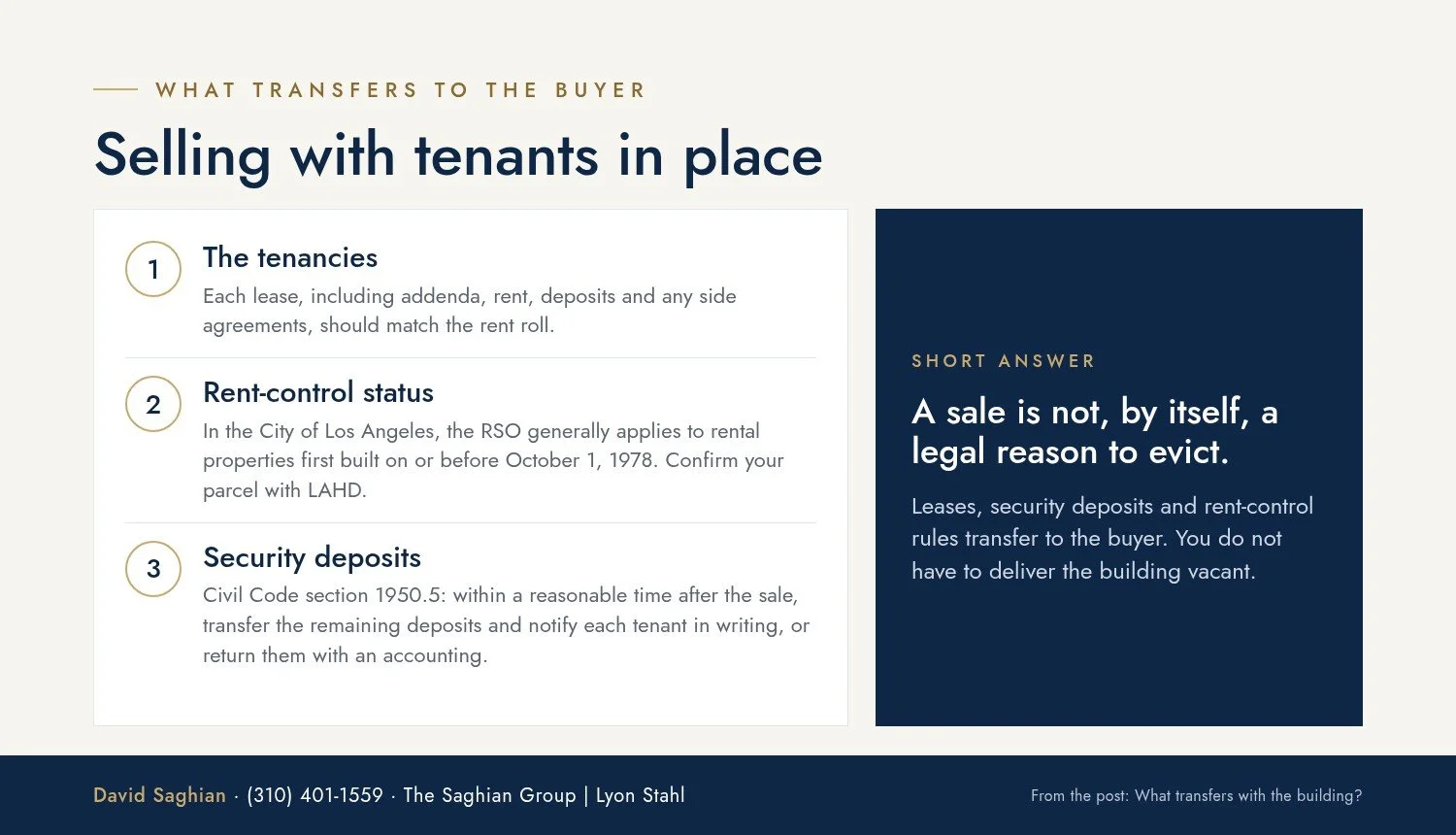
Buyers will expect three things to line up:
- The tenancies. Each lease, including addenda, rent, deposits and any side agreements, should match the rent roll. Gaps here become price cuts in diligence.
- Rent-control status. In the City of Los Angeles, the RSO generally applies to rental properties first built on or before October 1, 1978, including apartments and duplexes. See AB 1482 versus RSO, and confirm your parcel with LAHD.
- Security deposits. California Civil Code section 1950.5 requires you, within a reasonable time after the sale, to either transfer the remaining deposits to the new owner and notify each tenant in writing, or return them to the tenants with an accounting. Give the buyer a written statement of what remains, any lawful deductions, and which option you chose. If you do neither, you and the buyer can share liability for those deposits.
Confirm your building’s rent-control status with LAHD.
How do showings work in an occupied building?
California Civil Code section 1954 allows a landlord to enter to show a unit to prospective or actual purchasers, but not in a way that harasses the tenant. Except in an emergency, you generally need reasonable notice that states the date, approximate time and purpose, and you must enter during normal business hours unless the tenant agrees otherwise. Twenty-four hours is presumed reasonable. If you already gave written notice within the prior 120 days that the property is for sale, a showing notice may be given orally, and you must leave written evidence of the entry in the unit. Many sales are shown from the exterior and common areas, plus a representative unit by appointment, with a fuller inspection once a buyer is in escrow.
What is a tenant estoppel?
A tenant estoppel is a short form in which a tenant confirms the basic facts of the tenancy: rent, deposit, lease term, and whether any unwritten promises exist. Buyers and lenders commonly request them. They are not a City form and not a substitute for the leases. Purchase contracts often make delivery a seller obligation. Tenants usually return them faster when they are told, early and clearly, that the building is being sold and that their lease does not change.
Do you need a buyout or relocation payment just to sell?
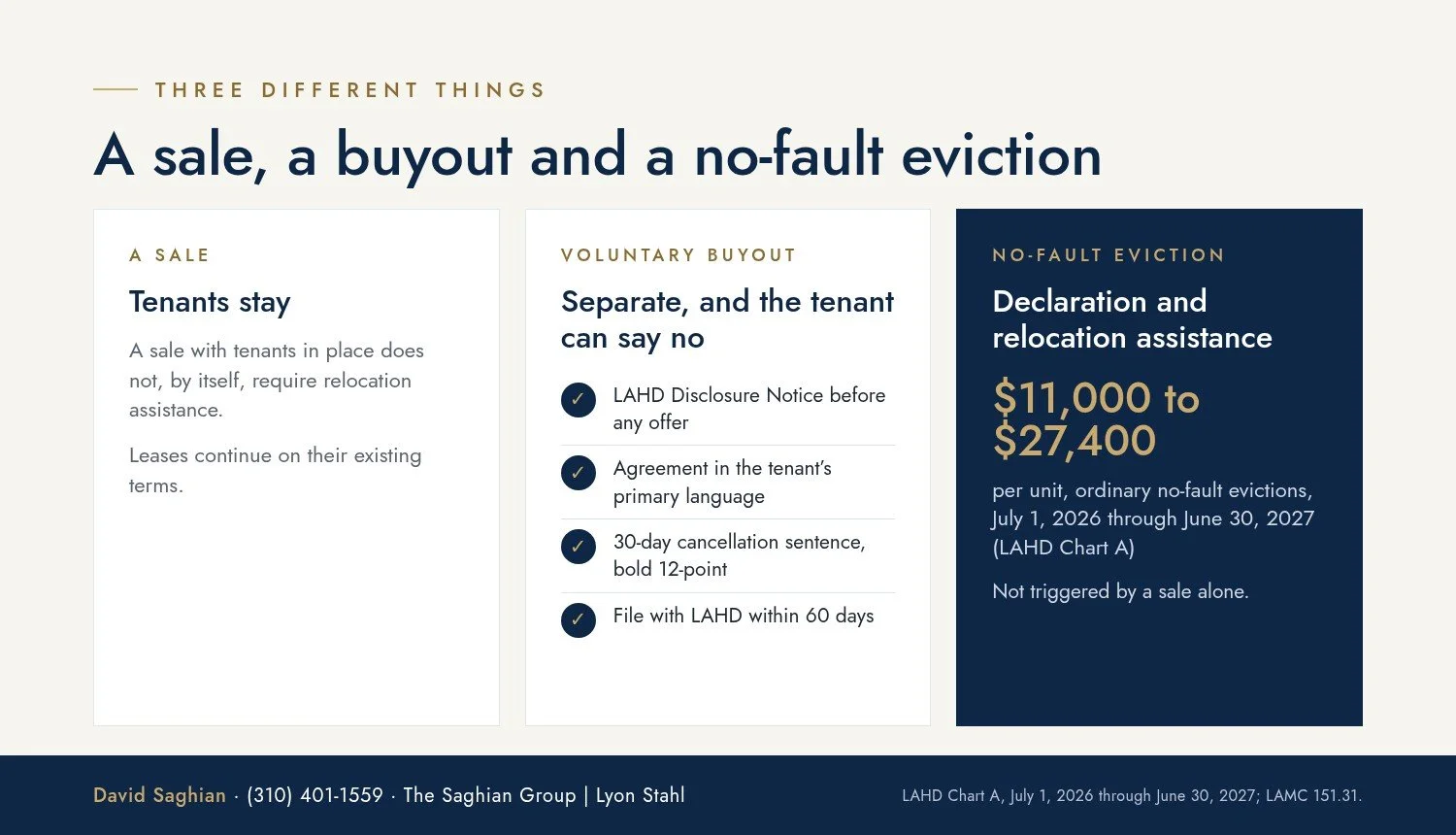
No. A sale with tenants in place does not, by itself, require relocation assistance. Those payments are tied to no-fault evictions and to certain withdrawals from the rental market, not to a transfer of title.
A voluntary buyout so a unit is delivered vacant is a separate process. In the City of Los Angeles, buyouts of RSO tenants fall under the Tenant Buyout Notification Program (Los Angeles Municipal Code section 151.31). Before making an offer, the landlord must give the tenant LAHD's signed and dated RSO Disclosure Notice. The agreement must be in the tenant's primary language, must include a bold 12-point sentence allowing cancellation for 30 days after signing with no penalty, and must be filed with LAHD, together with the notice, within 60 days. The tenant does not have to accept. If those steps are skipped, the tenant may cancel later and may have other remedies. See cash for keys versus the Ellis Act, and talk to a landlord-tenant attorney before you make any offer.
A no-fault eviction, such as an owner move-in or a good-faith withdrawal from the rental market, is also separate from a sale. LAHD requires a declaration filed in advance and payment of relocation assistance. For July 1, 2026 through June 30, 2027, Chart A amounts for ordinary no-fault evictions under the RSO and the Just Cause Ordinance are paid per unit and range from $11,000 to $27,400, based on household type, length of tenancy and income. Other amounts apply to certain small "mom-and-pop" owner-occupancy evictions and to some demolition cases. The figures change every July 1. They do not apply merely because you are selling.
Buyers usually price in-place income, then decide how much to pay for upside as units turn over lawfully. Do not promise vacancy you cannot lawfully deliver.
Relocation amounts are LAHD’s for July 1, 2026 through June 30, 2027 and change every July 1.
Thinking about selling an occupied building?
David Saghian of The Saghian Group at Lyon Stahl (DRE 01992252) personally handles every sale. He has personally closed $330M+ in sales. The Saghian Group's team track record is $430M+ across 100+ transactions. Call (310) 401-1559, or request a free property valuation. See our track record and how we count our sales.
Updated: November 2026. Every property and market is different, and past results do not guarantee future results. This article is general information, not legal or tax advice. Rent-control, buyout, entry and relocation rules change and depend on your building. Talk to a landlord-tenant attorney before you offer a buyout, serve a notice or file with LAHD, and to a CPA about taxes. Relocation amounts quoted here are LAHD's for July 1, 2026 through June 30, 2027.
Frequently Asked Questions
Can I sell my Los Angeles apartment building with tenants still living there?
Yes. Most buildings sell occupied. A sale is not, by itself, a lawful reason to evict, and the buyer takes the building subject to the existing tenancies.
Do the tenants have to move when the building sells?
No. Their leases and, where they apply, rent-control protections continue. For most tenants, the practical change is who the landlord is and where rent is sent.
Do I have to pay relocation assistance because I am selling?
No. Relocation assistance is required for certain no-fault evictions and withdrawals from the rental market, not for a transfer of title. Confirm any planned eviction or withdrawal with a landlord-tenant attorney and with LAHD before you act.
What notice do I have to give tenants before a showing or inspection?
California Civil Code section 1954 generally requires reasonable notice stating the date, approximate time and purpose of the entry. Twenty-four hours is presumed reasonable. Enter during normal business hours unless the tenant agrees otherwise, and do not use the right of access to harass the tenant.
What is a tenant estoppel, and do I have to get one?
It is a form in which a tenant confirms the terms of the tenancy. Buyers and lenders commonly request them in apartment sales, and many purchase agreements make them a seller obligation. They are not a City-required form.
Can I buy tenants out before I list?
Only through a voluntary, properly documented buyout, and only if the tenant agrees. In the City of Los Angeles, RSO buyouts must follow LAMC 151.31 and LAHD's Tenant Buyout Notification Program. A tenant is not required to accept. Read our cash-for-keys guide and speak with an attorney first.

David Saghian · 1st Vice President, Lyon Stahl
David leads The Saghian Group and has $330M+ in personally closed sales. The group has closed 100+ transactions in Los Angeles-area multifamily, land and retail.
About David Saghian