
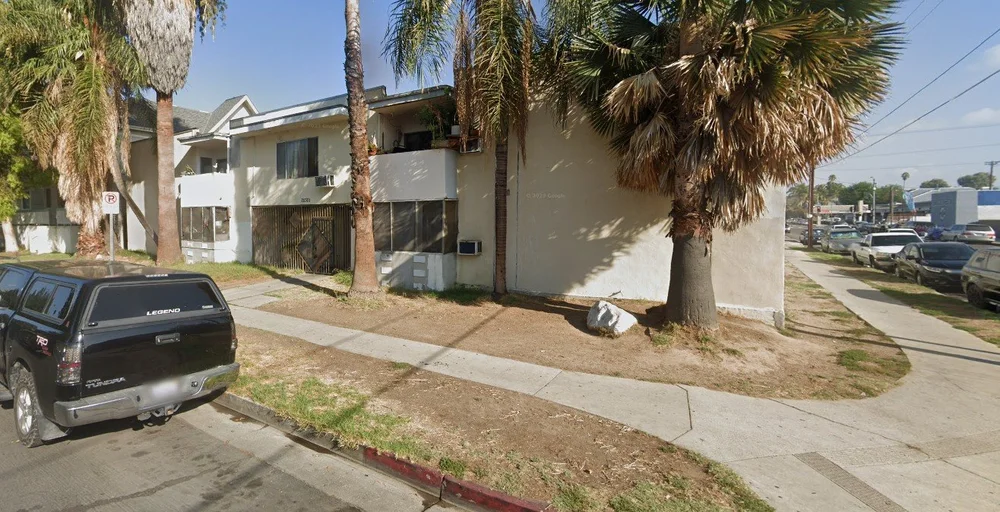
20301 Cohasset Avenue, Winnetka
Quick answer: Yes, you can sell a rent-controlled building, and buyers actively buy them. Under the City of Los Angeles Rent Stabilization Ordinance (RSO), which covers most rental properties in the city first built on or before October 1, 1978, the tenants and their rent limits stay in place after the sale. Buyers price the building mainly on today's rents and on what happens when units turn over. The RSO allowable increase is 3% for July 1, 2026 through June 30, 2027. To hold your price, have the LAHD registration, a unit-by-unit rent history, rent increase notices and any buyout filings ready before you list.
Rent control does not stop you from selling. RSO buildings change hands across Los Angeles, and the buyers who purchase them know how to price them. Our own sale of 20301 Cohasset Ave, a 22-unit building under LA City rent control, went to a buyer who was non-contingent on day one. What sets your price is how well your rent roll and records hold up. This guide covers what changes in an RSO sale, what buyers check and how to prepare so you keep your price through escrow.
For the rules themselves, including the 2026 changes to the RSO formula and how AB 1482 compares, see our guide to AB 1482 vs. LA rent control (RSO). This article focuses on the sale. For a closer look at the new formula, see LA's new RSO rent increase formula.
Step One: Confirm Which Rules Apply
Before you set a price, confirm three things:
- Is the property inside the City of Los Angeles? The RSO is a city ordinance. Burbank, Glendale, Beverly Hills, West Hollywood and Santa Monica are separate cities with their own rules. A Los Angeles mailing address is not proof of city jurisdiction.
- When was it first built? The Los Angeles Housing Department (LAHD) says the RSO generally applies to rental properties first built on or before October 1, 1978. The Housing tab on ZIMAS shows the official status.
- If it is not RSO, what applies instead? Many newer buildings fall under statewide AB 1482, and buildings less than 15 years old are exempt from the state rent cap.
Our closing pages show how much this varies, even within a few miles. 3401-3405 N Figueroa St in Cypress Park, built in 1988, was exempt from the RSO. 4135 Warner Blvd in Burbank is in a separate city and was not subject to local or city rent control. 20301 Cohasset Ave in Winnetka, a 22-unit building, was subject to LA City rent control.
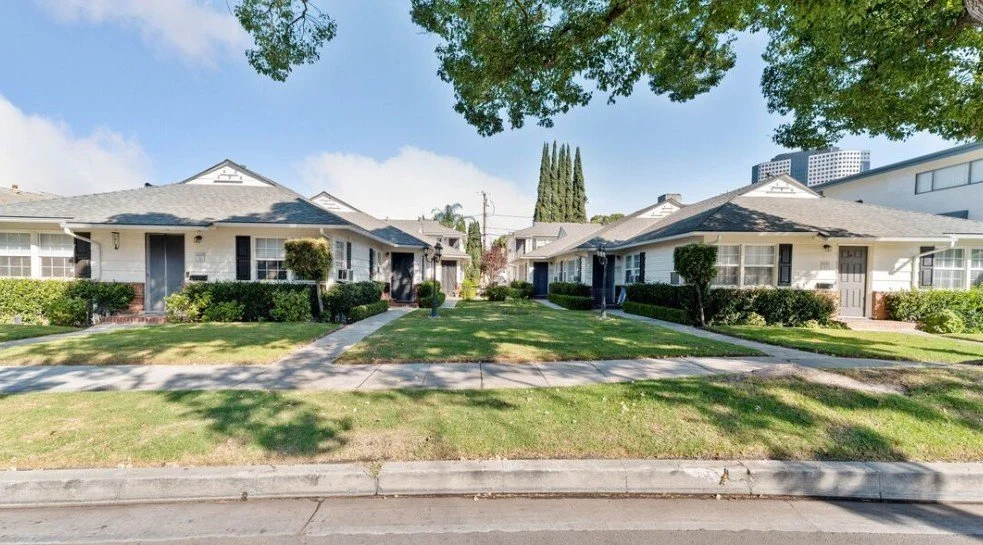
Front of 4135 Warner Boulevard, Burbank
What Transfers to the Buyer
An RSO building sells like any other apartment building in most ways: you price it, market it or sell it privately, pick a buyer and close escrow. What does not change at closing is the tenancies. The buyer takes the building subject to the existing leases, the RSO rent limits and the tenants' rights. A sale is not a reason to end a tenancy, and a new owner cannot reset rents just because the building changed hands.
Under the RSO, rent can generally return to market when a tenant voluntarily moves out, accepts a buyout agreement or leaves under certain other lawful circumstances listed by LAHD. Otherwise, increases are limited to the annual allowable amount, which LAHD has set at 3% for July 1, 2026 through June 30, 2027, applied once every 12 months.
How Buyers Price an RSO Building
Buyers of RSO buildings focus on three things:
- In-place income. What the building collects today, unit by unit, not what it could collect at market rents.
- The gap to market. How far each unit's rent is below market, and how long each tenant has been there.
- Turnover. Buyers estimate how often units have historically turned over and what that means for future income.
Because increases are limited, buyers usually pay for today's income and for long-term upside as units turn over, rather than for quick rent growth. That tends to show up in a higher cap rate and a lower price per unit than a comparable building with more room to raise rents.
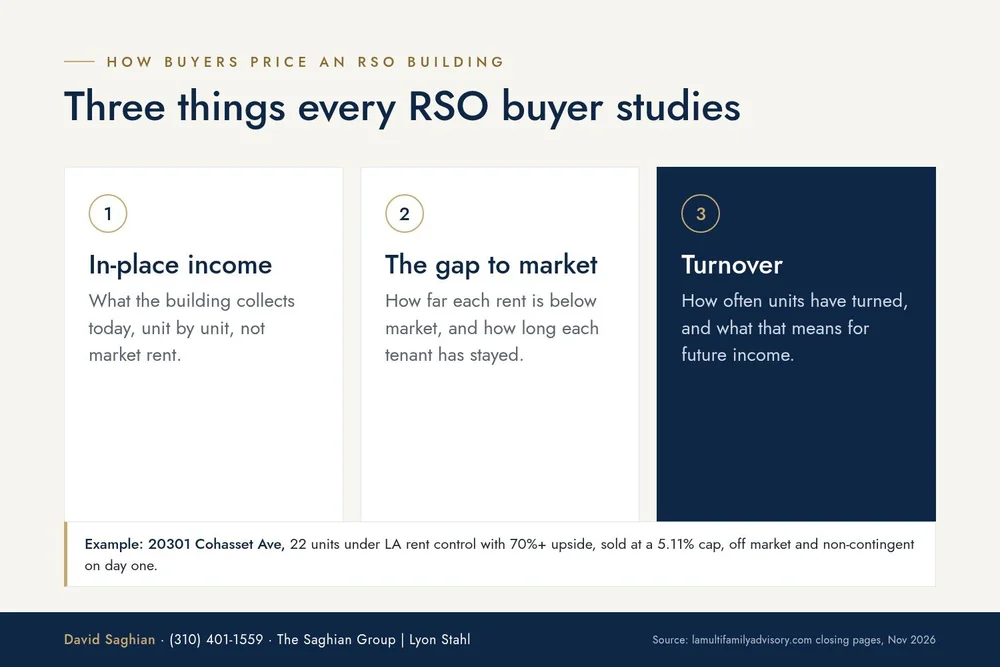
Buyers pay for today's income plus long-term upside as units turn over.
Our closings show the contrast. 20301 Cohasset Ave, subject to LA City rent control, had many units well below market and over 70% upside in market rents. It sold at a 5.11% cap rate, about $143,182 per unit, off market and non-contingent on day one, with David Saghian representing the seller. By comparison, 11156 Acama St in Studio City, built in 1988 and governed only by AB 1482, sold at a 4.89% cap rate with more than 25% upside in market rents. 4180 Arch Dr in Studio City, built in 1990 and governed by AB 1482, sold at a 5.4% cap rate with about 21% upside.
These buildings differ in location, size and condition, so they are not a direct comparison. They do show why rent status is one of the first questions a buyer asks. See our guide to apartment building comps in Los Angeles for how to build a fair comparison. For current cap rates by neighborhood, see Los Angeles apartment cap rates in 2026.
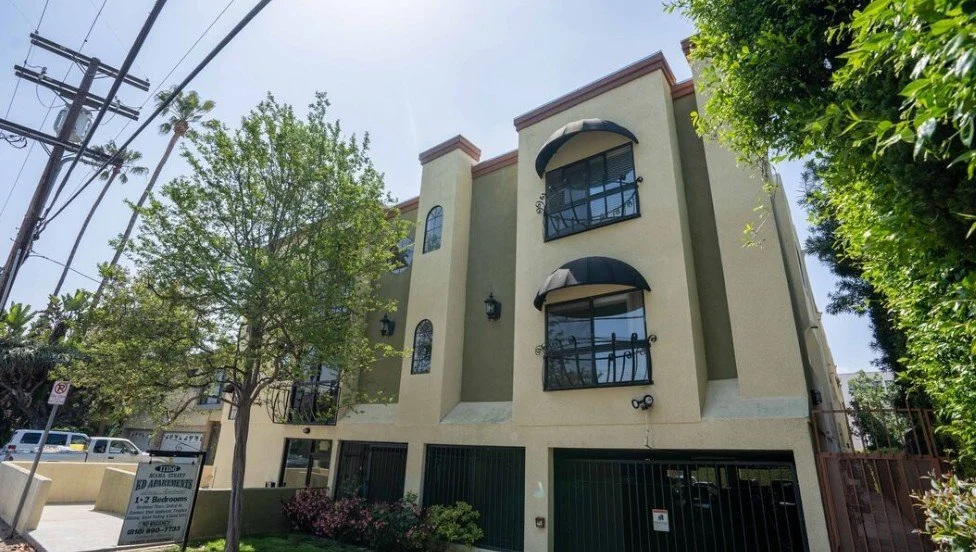
Front of 11156 Acama Street, Studio City
The Records That Protect Your Price
Buyers and their lenders check RSO buildings closely. Missing records are one of the most common reasons for a price cut during escrow. Gather these before you list:
- LAHD registration. Current RSO registration for every unit, and proof that registration fees are paid.
- A unit-by-unit rent roll. Move-in dates, current rent, deposit and the date and amount of the last increase.
- Rent increase notices. Copies of notices served, so a buyer can confirm the rents are lawful.
- Estoppel certificates. Tenant-signed statements confirming rent, deposit and lease terms, usually requested during escrow.
- Buyout records. Any buyout agreements and the LAHD filings that go with them (see below).
- Notices, orders and inspections. Any LAHD or Rent Adjustment Commission orders, code enforcement inspections or open cases.
- Retrofit and permit records. Many pre-1978 buildings were subject to the city's soft-story retrofit program. See our soft-story retrofit guide.
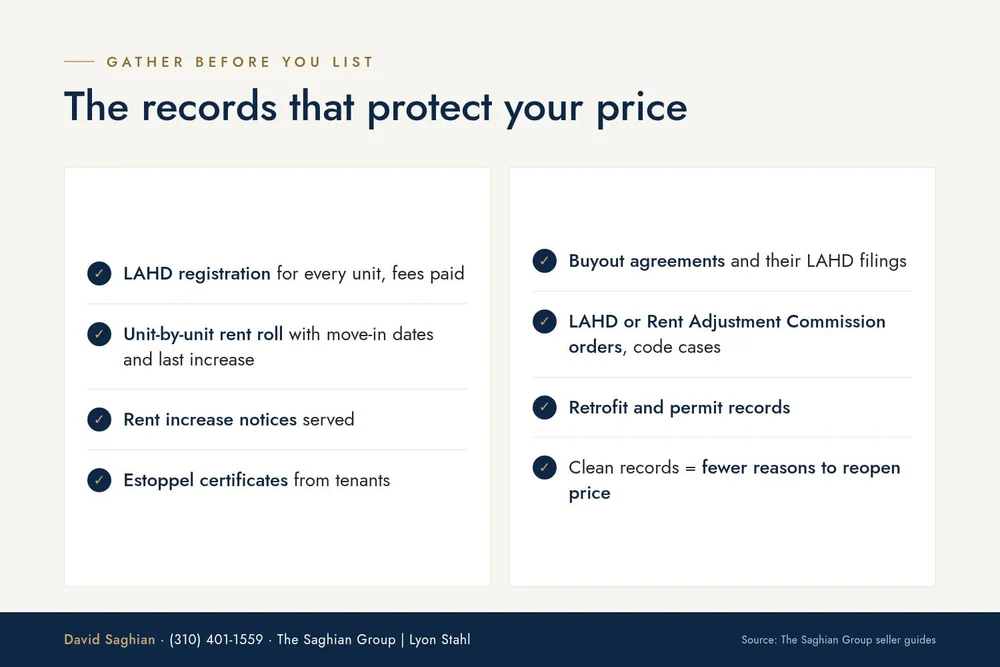
Missing records are one of the most common reasons for a price cut during escrow.
Clean records shorten escrow and give buyers fewer reasons to reopen price talks. For the full sale process, see our guide to selling an apartment building in Los Angeles.
Tenant Buyouts: Follow the City's Rules
Some owners ask whether to offer buyouts before selling, since vacant RSO units can be re-rented at market. That is a decision to make with a landlord-tenant attorney. The city sets strict rules.
Under the LAHD Tenant Buyout Notification Program (LAMC 151.31):
- Before making a buyout offer, the landlord must give the tenant the RSO Disclosure Notice, signed and dated.
- The tenant does not have to accept, and may cancel a signed buyout agreement within 30 days without penalty.
- The landlord must file the signed notice and buyout agreement with LAHD within 60 days of both parties signing.
- If the requirements are not met, the tenant can cancel the agreement at any time.
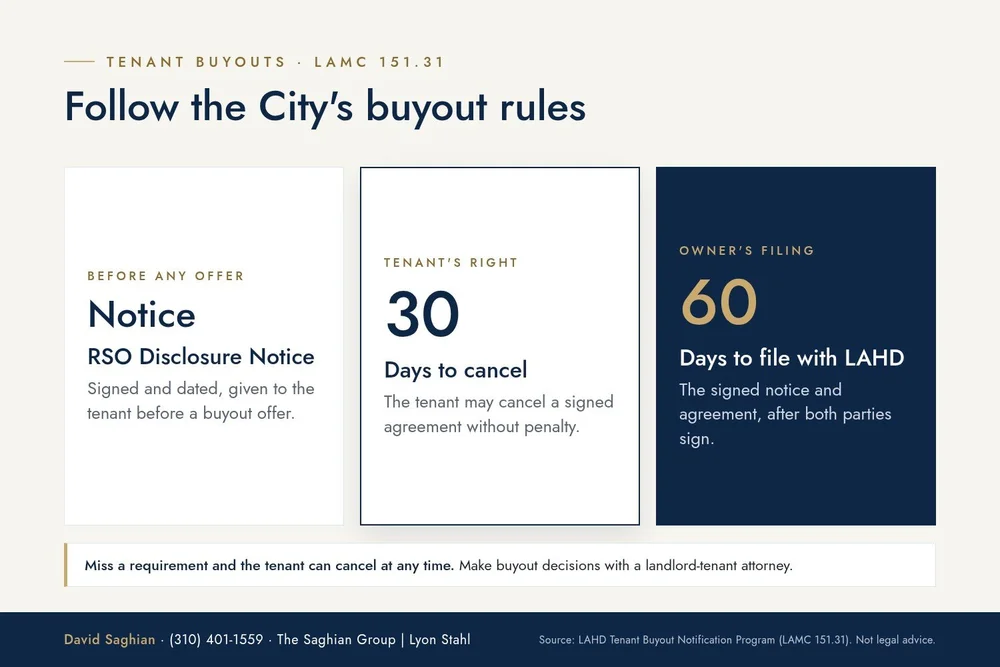
Buyers will ask for these filings.
Buyers will ask for these filings. A buyout that was not documented correctly can raise questions about whether a unit's new rent is lawful. Communications with tenants must also follow the city's Tenant Anti-Harassment Ordinance.
Selling to a Buyer Who Plans to Redevelop
Some RSO buildings sit on land zoned for more units. Developers price those sites on what they can build, not on current rents. State law and city rules on replacement units, relocation assistance and tenant protections can apply when occupied rental housing is redeveloped, and developers factor those costs into their offers.
Two of our Westside land sales show why the details matter. 1442-1446 S Bedford St in Pico-Robertson was delivered with all units vacant, so no tenant relocations were needed. At 845 S Le Doux Rd, the closing page notes the property was not subject to SB 330 low-income replacement requirements. If your building may appeal to developers, get the zoning and replacement analysis done before you price it.
Know Your Net Before You List
Most RSO buildings are inside the City of Los Angeles, so Measure ULA can apply when the price crosses a threshold. For sales closing July 1, 2026 through June 30, 2027, it is 4% of the full price for sales over $5,400,000 and below $10,900,000, and 5.5% at $10,900,000 or more. See our Measure ULA guide for apartment sellers and our net proceeds guide.
If you plan to reinvest, talk to your CPA about a 1031 exchange before you list. Some owners of long-held buildings trade into property that needs less management. The seller of 110 N Orlando Ave in Beverly Grove, owned for 24 years, is completing a 1031 exchange into a Delaware Statutory Trust.
The Bottom Line
An RSO building can sell well when the buyer can trust the rent roll. Confirm the building's status, gather the registration and rent history, document any buyouts correctly, and price it on today's income plus realistic upside. To see how buildings like yours have traded, browse our track record or the San Fernando Valley and Los Angeles multifamily pages. For a price range on your building, call David Saghian at (310) 401-1559 or request a free property valuation. For a typical timeline, see how long it takes to sell an apartment building in Los Angeles.
This guide is general information, not legal or tax advice. Confirm your situation with a California real estate attorney and your CPA.
Frequently Asked Questions
Can I sell a rent-controlled apartment building in Los Angeles?
Yes. RSO buildings sell regularly. The buyer takes the building subject to the existing tenancies and RSO rent limits, so the price is based mainly on today's rents and on long-term upside as units turn over.
Does rent control end when the building is sold?
No. RSO status and tenant protections stay with the units after a sale. Under LAHD rules, rent can generally return to market only after a lawful vacancy, such as when a tenant voluntarily moves out or accepts a properly filed buyout agreement.
How do I know if my building is under the RSO?
LAHD says the RSO generally applies to rental properties in the City of Los Angeles first built on or before October 1, 1978. The Housing tab on ZIMAS shows the official status. Separate cities such as Burbank, Glendale, Beverly Hills and West Hollywood have their own rules.
What is the RSO rent increase for 2026–2027?
LAHD set the RSO allowable increase at 3% for July 1, 2026 through June 30, 2027, applied once every 12 months.
Are RSO buildings worth less than non-rent-controlled buildings?
Buyers usually pay less for each dollar of future rent growth because increases are limited, which often shows up as a higher cap rate. The actual value depends on location, condition, how far rents are below market and turnover history, so compare closed sales of similar buildings.
Should I buy out tenants before selling?
That is a decision to make with a landlord-tenant attorney. Under LAMC 151.31, the landlord must give the tenant the RSO Disclosure Notice before any offer, the tenant can cancel within 30 days, and the signed agreement must be filed with LAHD within 60 days.
What documents do buyers ask for when buying an RSO building?
Current LAHD registration, a unit-by-unit rent roll with move-in dates and last increases, rent increase notices, estoppel certificates, buyout filings, any LAHD or code enforcement orders, and retrofit and permit records.
How do I reach David Saghian?
Call (310) 401-1559 or request a free property valuation on lamultifamilyadvisory.com. David Saghian is licensed with Lyon Stahl Investment Real Estate, DRE 01992252.